How to select organic pet food options? The answer begins with evidence, not attractive packaging. China’s expanding pet-food manufacturing sector offers diverse choices, from organic chicken recipes to grain-free formulas. Yet “organic” does not automatically mean nutritionally complete, safer, or suitable for every animal. The label deserves careful examination.
The American Pet Products Association reported that 66% of U.S. households owned a pet in its 2023–2024 National Pet Owners Survey. This broad consumer base is increasing demand for transparent, premium nutrition. Meanwhile, FDA guidance explains that pet-food labels must provide accurate ingredient and nutritional information. A responsible supplier should also provide batch records, laboratory testing, traceability documents, and clear feeding instructions. Ask for them.
Veterinary nutritionist Dr. Lisa M. Freeman has stated, “There is no one-size-fits-all diet for every pet.” That principle matters when comparing Chinese suppliers. A small dog may need different calorie density than an active large breed. A cat with kidney disease requires professional dietary advice, not a fashionable organic claim. Look for AAFCO nutritional adequacy statements, independent testing, and manufacturing standards such as HACCP or ISO 22000. These details reveal more than a green logo.
Supplier selection still contains uncertainty. Certification systems can differ by market, and translated documents may hide important gaps. I would request current certificates, verify the issuing bodies, inspect sample packaging, and test a small order before scaling. Organic claims should be checked carefully. Quality is demonstrated through records, consistency, and accountability—not promises alone.
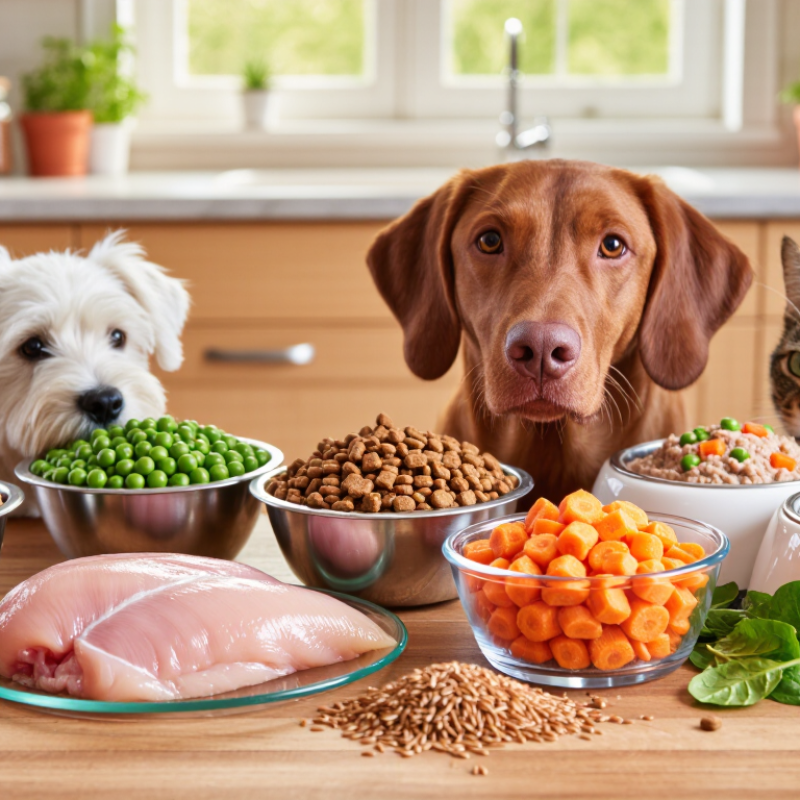
When selecting organic pet food from China suppliers, define the claim before comparing prices or packaging.
Under the USDA organic standard, a product using the “organic” claim generally needs at least 95% certified organic ingredients, excluding water and salt.
The remaining ingredients must meet permitted requirements. They cannot simply be conventional fillers chosen for lower cost.
Ask the supplier for:
Look closely at vague terms.
“Natural,” “premium,” and “with organic ingredients” do not prove a 95% organic composition.
A polished document can still hide an outdated ingredient formula.
No checklist is flawless. It is easy to trust a familiar-looking seal too quickly.
Compare the certificate with the actual formula, packaging text, and batch records.
If one ingredient lacks clear status, pause the purchase and request written clarification.
Careful sourcing is slower, but it protects the buyer from unsupported organic claims and helps maintain consistent product quality.
When selecting organic pet food from top China suppliers, begin with compliance, not attractive packaging. GB/T 19630-2019 sets requirements for organic production, processing, labeling, and management. However, it is not enough to see “organic” printed on a product page. Ask whether the supplier holds a valid Chinese organic certificate for the specific pet food, factory, and ingredient scope.
Request the certificate number, certification body, issue date, covered facility, and approved product categories. Check the details through China’s official certification information platform when possible. The factory address should match the production site shown in audit documents. A certificate for plant-based ingredients may not cover processed pet food. This small difference matters.
Review the supplier’s traceability system in practical detail. Can they show purchase records for organic meat, grains, or vegetables? Are organic and non-organic materials stored in separate, clearly marked areas? Ask for batch records, sanitation procedures, inspection reports, and sample labels. Packaging should not make broader organic claims than the certificate allows. Translation can also create mistakes, especially around certification scope.
A clean PDF is not proof by itself. Suppliers may provide outdated documents without realizing the risk. I would verify dates, product names, and factory information line by line. Independent factory audits remain useful, although they cannot replace official certification. No checklist is perfect. The strongest supplier responds clearly, supplies consistent records, and accepts reasonable verification before a purchase order.
Practical supplier-screening matrix for organic pet food sourcing
| Compliance Dimension | What the Supplier Should Provide | Evidence to Check | Acceptance Benchmark | Risk Signal | Priority |
|---|---|---|---|---|---|
| Organic certification scope | A current organic certificate covering the actual pet-food product, processing site, and relevant organic categories. | Certificate copy, certification body, certificate number, validity period, certified scope, and production address. | The certificate must be valid on the purchase date and must match the product and facility shown in the quotation. | Only an ingredient certificate is supplied, or the certificate covers a different factory or product. | Critical |
| Conformity with GB/T 19630-2019 | Documented organic production, processing, management, and labeling controls aligned with China’s GB/T 19630-2019 organic standard. | Organic management manual, certification audit report or summary, corrective-action records, and applicable operating procedures. | The supplier can explain how organic controls are implemented from incoming materials through finished-product release. | The supplier uses “organic” as a marketing claim but cannot provide certification or controlled procedures. | Critical |
| Organic ingredient percentage | A complete formula showing each ingredient, its source, and its organic certification status. | Bill of materials, supplier certificates, purchase records, and mass-balance or formulation calculations. | The claimed organic category and percentage must be supported by the certified formulation and applicable labeling rules. | The formula is withheld, percentages are rounded without records, or conventional ingredients are presented as organic. | High |
| Approved input materials | An input list identifying agricultural ingredients, additives, processing aids, cleaning agents, and packaging materials. | Input approval list, technical specifications, organic certificates, safety data, and change-control records. | Each input is permitted under the applicable organic-control requirements and is approved before use. | Unapproved preservatives, undocumented processing aids, or last-minute formula substitutions. | High |
| Segregation and contamination prevention | Controls preventing contact or mixing between organic and conventional materials during storage, production, and packing. | Warehouse zoning, production scheduling, line-clearance records, cleaning validation, pest-control records, and allergen controls. | Organic materials are identifiable, physically or procedurally segregated, and traceable through each production step. | Shared lines are used without documented cleaning, clearance, or reconciliation procedures. | High |
| Traceability and mass balance | A batch-level system linking raw materials, production records, packaging, finished goods, and shipment documents. | Batch codes, receiving logs, inventory records, production reports, yield records, test reports, and dispatch documentation. | A selected finished-food batch can be traced backward to inputs and forward to the customer shipment. | Batch codes are missing, duplicated, or disconnected from raw-material and shipping records. | High |
| Label and packaging review | Artwork and packaging information that accurately identifies the certified organic claim and product details. | Final artwork, Chinese label, ingredient list, net content, batch identification, shelf life, storage instructions, and certification information. | Claims, certification marks, and product information are consistent with the certificate and applicable Chinese labeling requirements. | Unapproved organic logos, vague claims such as “natural organic,” or artwork that differs from certified information. | High |
| Food-safety and quality testing | A risk-based testing program for finished pet food and relevant raw materials. | Recent batch test reports from competent laboratories, specifications, sampling plans, and nonconformance investigations. | Results meet the product specification and applicable Chinese pet-food safety requirements; test reports identify the tested batch. | Generic reports are supplied without batch linkage, laboratory details, or corrective-action evidence. | High |
| Factory operating authorization | Evidence that the manufacturing site is legally established and authorized for the relevant type of pet food. | Business license, applicable production or filing documents, facility address, scope of operations, and inspection records. | Legal entity, site address, production scope, and supplied product information are consistent across documents. | Trading-company documents are presented for a different manufacturing site, or the production scope is unclear. | High |
| Supplier audit readiness | Access to the production site, records, responsible personnel, and sample batches for pre-award verification. | Audit plan, contact list, corrective-action procedure, visitor rules, and agreed document-sharing process. | The supplier accepts document review and an independent or customer audit before commercial approval. | Refusal to disclose the production site, certification body, or records relevant to the supplied product. | Medium |
| Certificate and claim monitoring | A process for notifying buyers about certificate expiry, suspension, scope changes, formula changes, and label changes. | Certificate-status checks, renewal calendar, change-notification procedure, complaint records, and recall procedure. | No organic claim is used after certification expiry, suspension, withdrawal, or removal of the product from the certified scope. | The supplier cannot explain certificate renewal, suspension handling, or product recall responsibilities. | Medium |
Selecting organic pet food requires more than attractive packaging or a low quotation. Ask suppliers for valid organic certificates covering the exact product and production site. Check certification dates, issuing bodies, and permitted ingredients. A certificate alone is not enough. Review the ingredient chain from farm records to finished cartons. Traceability should identify batch numbers, processing dates, suppliers, and storage conditions. Request a mock recall exercise. It should locate affected products quickly.
Audit food-safety controls with practical evidence. ISO 22000 certification can show a structured system, but it does not guarantee every batch is perfect. Review hazard analysis, allergen controls, sanitation logs, pest monitoring, and employee training. Ask how the factory handles deviations. A strong supplier provides corrective-action reports instead of vague promises. Inspect recent third-party audit findings, including unresolved observations. Small gaps matter. They reveal daily discipline.
Tips: Request batch-specific COAs, not generic templates. Check testing methods, laboratory accreditation, sample dates, and results for pathogens, heavy metals, moisture, and additives. Compare COA details with the product specification and packaging label. Keep retained samples from each shipment when possible. During a factory visit, watch handwashing, raw-material separation, and warehouse temperature records. I would also interview quality staff privately. Their answers may expose weak procedures. My own review can miss something, so independent testing remains worthwhile.
When selecting organic pet food from top China suppliers, start with the complete-diet statement. A complete diet should match the animal’s life stage, species, and nutritional needs. Check whether the formula follows AAFCO nutrient profiles or FEDIAF nutritional guidelines. These references help compare protein, fat, vitamins, minerals, and essential amino acids.
Ask the supplier for a full specification sheet, not only a glossy product leaflet. Review guaranteed analysis, ingredient percentages, feeding directions, and laboratory test dates. For example, a puppy formula needs carefully controlled calcium and phosphorus levels. A cat formula should provide taurine and sufficient arachidonic acid. Small details matter. Request test reports from qualified laboratories, batch numbers, and sample retention procedures. I have found that clear documentation often reveals more than impressive packaging.
Organic claims also require close checking. Confirm the certification standard, issuing body, covered ingredients, and production site. “Organic” may describe selected ingredients rather than the entire recipe. Traceability should connect each major ingredient to its supplier and processing record. Compare the product label with the laboratory results and the stated AAFCO or FEDIAF profile. Sometimes the documents do not align perfectly. That is a warning, not a minor inconvenience. Supplier audits, facility hygiene records, contamination controls, and transparent answers can support a more reliable decision.
Selecting organic pet food from top China suppliers requires more than checking an organic-looking label. Testing must match China’s 2021 pet-feed safety requirements and applicable GB standards. Ask for batch-specific reports covering crude protein, fat, moisture, ash, vitamins, and minerals. Safety panels should include Salmonella, mold, mycotoxins, heavy metals, and prohibited substances. A certificate alone is not enough.
The 2023 China Pet Industry White Paper reported 116.55 million urban dogs and cats in 2022. That scale increases the cost of weak quality control. Request the laboratory’s name, accreditation status, test method, detection limit, sampling date, and product batch number. Verify that results align with China’s feed hygiene limits and Ministry of Agriculture and Rural Affairs requirements. Do not accept reports covering only raw ingredients. The finished product matters.
In my supplier audits, traceability often reveals more than polished paperwork. The factory should show sealed retain samples, temperature records, sanitation logs, and corrective-action reports. Test results should be recent and independently verifiable. Organic claims also need careful review, because “natural” does not automatically mean certified organic or microbiologically safe. I would challenge any supplier refusing repeat testing. That hesitation is a warning sign. Even reliable factories can have sampling gaps, so periodic retesting remains necessary.
It generally requires at least 95% certified organic ingredients, excluding water and salt. The remaining ingredients must also be permitted.
Request a current organic certificate, certifier details, ingredient percentages, and production records. Also ask for batch numbers and laboratory reports.
No. The certificate must cover pet food, the actual factory, and the relevant ingredient scope. A certificate alone is not enough.
Check the certificate number, issue date, facility address, and approved product category. Verify the information through the official certification platform when possible.
A document may describe an outdated formula. Compare the certificate, ingredient list, packaging text, and batch records line by line.
Ask for purchase records for organic meat, grains, or vegetables. Review batch records, storage controls, sanitation procedures, and inspection reports.
They should remain in separate, clearly marked storage areas. This reduces mix-ups during production.
No. Such terms do not establish a 95% organic composition. “With organic ingredients” also lacks that proof.
Pause the purchase and request written clarification. Do not rely on a polished PDF or familiar-looking seal.
No. An audit can reveal practical problems, but it cannot replace valid official certification. The checklist may still miss something.
How to select organic pet food options? Start by checking whether the product genuinely meets recognized organic criteria. A credible claim should clearly indicate that at least 95% of its ingredients are organically produced under the relevant USDA threshold, while suppliers serving the Chinese market should also demonstrate compliance with China’s GB/T 19630-2019 organic standard. Buyers should request ingredient records, certificates, supplier qualification documents, and certificates of analysis (COAs) to verify sourcing, authenticity, and product consistency.
A reliable supplier should maintain complete batch traceability and robust ISO 22000-based food-safety controls, including testing for contaminants and microbiological risks. The formula should also qualify as a complete and balanced diet by matching appropriate AAFCO or FEDIAF nutrient profiles for the intended species and life stage. Finally, confirm that manufacturing, labeling, and laboratory testing satisfy China’s 2021 pet-food safety requirements. Comparing documentation, testing results, and quality systems allows buyers to select organic pet food with greater confidence.

Pdara Pet