Choosing healthy treats from China suppliers requires more than attractive packaging or a low quotation. The real work begins with the ingredient list, production controls, and evidence behind every claim. Ask whether the supplier clearly identifies sugar, sodium, allergens, artificial colors, preservatives, and serving sizes. A trustworthy manufacturer should provide current specifications, batch records, and independent laboratory reports. Check whether testing covers heavy metals, microbial safety, pesticides, and other risks relevant to the product. Certificates matter, but they should come from recognized bodies and match the actual factory and product.
How to choose treats without harming health? Start with a small sample order, not a large commitment. Examine the texture, smell, label accuracy, seal quality, and storage instructions. Compare the sample with the approved specification after production. A reliable supplier should explain ingredient origins, traceability procedures, and corrective actions when results fail. Ask for production photos or arrange a qualified third-party factory audit where practical. Never depend only on a polished website. That assumption can be costly.
Healthier choices also depend on the intended consumer. Children, older adults, and people with allergies may need stricter screening. Local food standards and labeling rules must be checked before import or sale. No checklist is perfect. Suppliers can change ingredients, factories, or processes without obvious warning. Therefore, schedule periodic testing and keep written records of approvals. The best China supplier is not always the cheapest one. It is the partner that communicates clearly, welcomes verification, and consistently protects product quality.
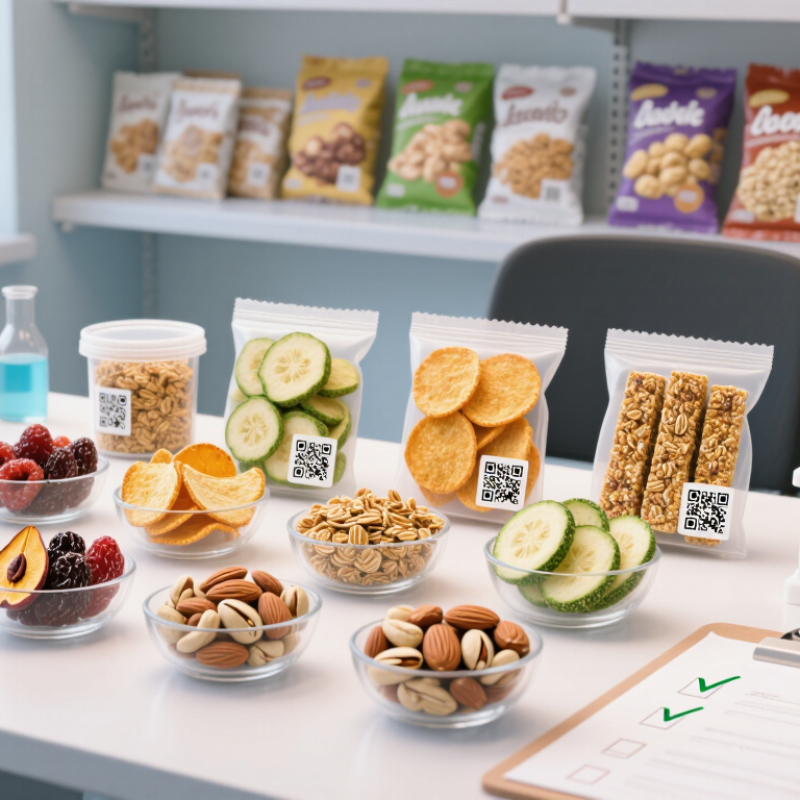
Healthy treats should be defined before supplier conversations begin. In my sourcing work, I separate “healthy” into measurable nutrition and believable consumer value. The IFIC 2024 Food & Health Survey reported that 73% of Americans consider healthfulness when choosing food or drinks. That signals demand, not permission for vague claims. The WHO recommends free sugars below 10% of daily energy, ideally below 5%. Sugar deserves a clear threshold.
A practical specification should list serving size, calories, total sugar, added sugar, sodium, saturated fat, protein, fiber, allergens, and ingredient origin. It should also define testing methods and batch limits. A short ingredient list does not prove better nutrition. I have seen wholesome-looking products with unexpectedly large portions. That detail matters.
Consumer requirements vary by market. Parents may prioritize low sugar and allergen clarity, while active adults may seek protein and resealable packaging. The 2024 consumer research from Innova Market Insights identified health as a major purchase influence, but consumer language remains inconsistent. Suppliers should provide certificates of analysis, laboratory results, traceability records, and shelf-life evidence. Ask for current documents, not sample files. China suppliers can support pilot batches before scale-up. I would still challenge every “natural” claim. It sounds attractive, yet it may hide little substance.
Healthy Treat Standards and Consumer Requirements: a practical per-serving screening guide based on U.S. FDA Daily Values.
Use 10% of the Daily Value as a simple screening target for added sugars, saturated fat, and sodium per serving, while aiming for at least 10% of the Daily Value for dietary fiber. These benchmarks support portion control, transparent nutrition labeling, and healthier product selection; they are not a substitute for local regulatory requirements.
Choosing healthy treats from China suppliers requires more than attractive packaging or a low quotation. Start with the ingredient list and request specifications for every raw material. Look for recognizable ingredients, clear allergen statements, origin records, and batch-level certificates of analysis. Excessive sugar, sodium, artificial coloring, or vague “flavoring” deserves further questioning. Labels can mislead.
Nutrition should match the intended consumer, not merely market trends. The World Health Organization recommends keeping free sugars below 10% of daily energy intake, with additional benefits below 5% (WHO, Guideline: Sugars Intake for Adults and Children, 2015). Ask suppliers for laboratory results covering sugar, fat, protein, calories, and additives. Compare these figures with the serving size. A small package can hide a surprisingly large sugar load.
Product safety needs documented control. The WHO estimates that contaminated food causes about 600 million illnesses and 420,000 deaths worldwide each year (WHO, Estimates of the Global Burden of Foodborne Diseases, 2015). Request HACCP or ISO 22000 records, microbial testing, heavy-metal screening, pesticide results, and packaging migration tests. Verify whether samples come from the same production line and batch. A certificate is not proof of every shipment. I would also arrange independent testing before large orders, because paperwork can be complete while traceability remains weak. Factory hygiene, sealed storage, moisture control, and recall procedures matter. Ask for evidence, not promises.
Choosing healthy treats from Chinese suppliers starts with verified credentials, not attractive packaging. The World Health Organization estimates that unsafe food causes 600 million illnesses and 420,000 deaths annually. That figure makes supplier screening a practical duty, not paperwork. Request the company’s business license, production permits, certification numbers, and approved product scope. Check every certificate through the issuing body’s public database. A scanned document alone proves very little.
HACCP and ISO 22000 can show structured food-safety controls, while GFSI-recognized audits may provide broader manufacturing evidence. Ask for the latest audit report, corrective-action records, allergen controls, and laboratory results. The results should identify testing dates, methods, and sample batches. Confirm that the factory actually makes the treats. Some trading companies present certificates belonging to another facility.
Walk through the production details, even remotely. Look for separated raw-material storage, stainless-steel contact surfaces, handwashing stations, pest-control logs, and temperature records. Check whether sugar, sodium, allergens, and additives match the label. I have seen buyers trust a certificate scan too quickly; that shortcut is easy to regret. A certificate may be valid, yet the daily process can still be inconsistent. Ask for batch traceability and a recent mock-recall record. Then test samples independently before placing a larger order. WHO data offers the warning; factory evidence should guide the decision.
Choosing healthy treats requires more than checking attractive photos or ingredient claims. Request several product samples from each supplier. Compare texture, aroma, sweetness, ingredient lists, and visible consistency. Check the seal. Ask for laboratory reports covering nutrition, allergens, microbiological safety, and shelf life. A sample may taste excellent, yet the production batch can differ. Request samples from different production dates when possible. Keep written notes, including storage conditions and opening dates.
Pricing should include more than the unit cost. Compare minimum order quantities, tooling fees, sample charges, inspection costs, freight, and import duties. A low quotation may hide expensive packaging or slow communication. I have learned to question unusually cheap offers. Ask for a clear price breakdown and payment schedule. Also compare packaging carefully. Healthy treats need protection from moisture, heat, crushing, and contamination. Review material specifications, seal strength, labeling space, carton dimensions, and recycling options. Packaging is not decoration here.
Delivery terms deserve equal attention. Confirm production lead time, dispatch location, shipping method, temperature requirements, and responsibility for damaged goods. Ask how delays are reported and how replacement claims are handled. Request a written commercial invoice, packing list, and agreed product specifications. Do not rush. A supplier who answers clearly is often easier to manage, but responsiveness alone does not prove reliability. Recheck every promise against samples, records, and a small trial order before making a larger commitment.
Choosing healthy treats from China suppliers requires more than comparing prices or reading product photos. Define measurable standards before requesting quotations. Set limits for moisture, protein, fat, calories, allergens, and microbiological results. Ask for ingredient specifications, production dates, certificates of analysis, and traceability records for every lot.
Keep control close to the product. Request pre-production samples, then compare them with finished goods. Check odor, texture, color, package seals, and label accuracy. Independent laboratory testing can verify critical safety indicators. A supplier’s internal report helps, but it should not be the only evidence. Use retained samples from each shipment and record results in a simple inspection log.
A spreadsheet is not control. Long-term management needs regular communication and documented action. Review delivery accuracy, defect rates, test results, and complaint response times each quarter. Visit the facility when practical, or arrange a qualified third-party audit. If a batch fails, require root-cause analysis and a corrective-action deadline. Do not accept vague promises. Supplier scorecards are useful, though they can hide small recurring problems. Discuss those patterns directly and update specifications when experience exposes a weakness. Keep an approved backup supplier, but do not switch production without fresh testing. Reliability grows through repeated evidence, not a single successful shipment.
Compare texture, aroma, sweetness, color, ingredient lists, and visible consistency. Check the seal and record storage conditions. Keep notes. A tasty sample may not match later production.
Different dates can reveal changes in texture, color, or ingredient consistency. Finished goods may differ from pre-production samples. This comparison exposes weaknesses early, though it may not catch every problem.
Request ingredient specifications, laboratory reports, certificates of analysis, production dates, and traceability records. Reports should cover nutrition, allergens, microbiological safety, and shelf life. One report is not enough.
Compare unit price, minimum order quantity, tooling, sample charges, inspection, freight, and import duties. Ask for a clear payment schedule. Very cheap offers deserve careful questions.
Packaging should resist moisture, heat, crushing, and contamination. Review material details, seal strength, labeling space, carton size, and recycling options. Packaging is not decoration.
Confirm production lead time, dispatch location, shipping method, temperature requirements, and damage responsibility. Ask how delays and replacement claims are handled. Get the terms in writing.
Compare pre-production samples with finished goods. Inspect odor, texture, color, seals, labels, and retained samples from each shipment. Independent testing can verify important safety indicators.
Review delivery accuracy, defect rates, test results, and complaint response times each quarter. Use a supplier scorecard, but discuss recurring small problems directly. A spreadsheet is not control.
Require a root-cause analysis and a corrective-action deadline. Do not accept vague promises. Recheck the replacement batch before increasing the order. Mistakes happen, and repeated mistakes matter more.
Choosing healthy treats from the best China suppliers begins with clearly defining what “healthy” means for your target consumers. Consider expectations for lower sugar, balanced nutrition, simple ingredients, allergen control, suitable portion sizes, and transparent labeling. The key question is: How to choose treats without harming health? Review ingredient quality, nutritional information, shelf life, and safety controls, while requesting reliable testing records and product specifications. Avoid making decisions based only on attractive packaging or low prices.
Next, verify each supplier’s business qualifications, relevant certifications, facility standards, and manufacturing practices. Compare samples carefully for taste, texture, consistency, packaging durability, pricing, minimum order quantities, and delivery terms. Before establishing a long-term relationship, create clear quality requirements, inspection procedures, batch documentation, and communication standards. Regular performance reviews, sample testing, and feedback tracking can help maintain product safety and consistency. A responsible supplier should demonstrate transparency, stable production capacity, and a willingness to improve products according to changing consumer needs.

Pdara Pet