Indoor living protects pets from traffic, parasites, and harsh weather. Yet it can also reduce movement, sunlight exposure, and natural foraging. According to the American Pet Products Association’s 2023–2024 National Pet Owners Survey, about 66% of U.S. households own a pet. That figure reflects millions of animals spending most of their lives beside sofas, windows, and food bowls.
So, what supplements are necessary for indoor pets? The honest answer is less dramatic than many advertisements suggest. Healthy dogs and cats eating a complete, balanced diet may need no routine supplement. The FDA and AAFCO both emphasize nutritional adequacy, while FEDIAF’s 2024 nutritional guidelines distinguish complete foods from complementary products. Supplements should fill a documented gap, not decorate an already balanced diet.
Still, individual needs vary. An indoor cat with recurring hairballs may require a veterinarian-approved fiber strategy. An aging dog with stiff hips might benefit from carefully selected joint-support ingredients. Omega-3 oils, probiotics, dental products, and vitamin supplements also deserve closer examination. Quality matters. Dosage matters more.
A label can look scientific.
This guide examines seven commonly recommended supplements through evidence, safety, and practical use. It considers veterinary guidance, ingredient quality, possible interactions, and the small daily details owners often miss—such as a greasy capsule left beside a warm food bowl. Some claims remain uncertain, and that uncertainty should be admitted. Before adding anything, discuss your pet’s diet, age, medications, and symptoms with a qualified veterinarian.
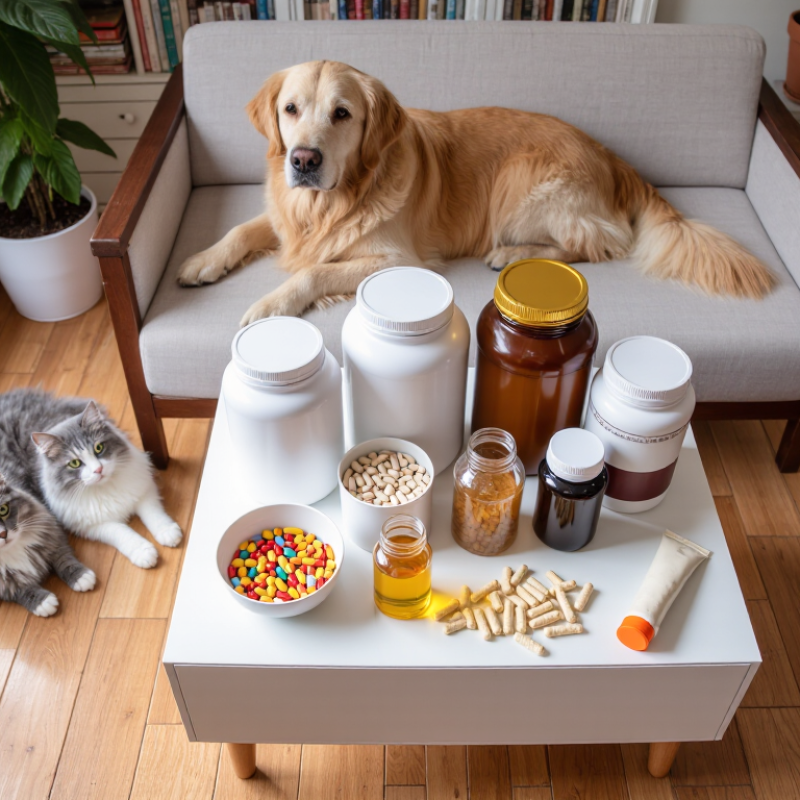
Indoor Pet Nutrition Needs: AAFCO’s Complete-and-Balanced Standard
7 Best Supplements for Indoor Pets: What Do They Need?
Indoor Pet Nutrition Needs: AAFCO’s Complete-and-Balanced Standard
Indoor pets may look protected, yet apartment life can hide nutrition gaps. AAFCO’s Complete-and-Balanced standard is the practical starting point, not a supplement list. The 2024 AAFCO Official Publication defines nutrient profiles for adult maintenance, growth, reproduction, and all life stages. A suitable diet should provide essential vitamins, minerals, amino acids, and fatty acids. That matters more than adding seven products.
Veterinary nutrition guidance treats supplements as targeted tools, not automatic upgrades. Indoor cats may gain weight because limited movement lowers daily calorie needs. The Association for Pet Obesity Prevention reported that 61% of surveyed cats were overweight or obese in 2022. Measured portions, daily play, and body-condition checks may help more than a calorie-dense chew. I have seen owners count supplements but overlook treats. That mistake is common.
Indoor status alone does not prove a need for probiotics, joint products, taurine, or multivitamins. A veterinarian should match any supplement to age, diagnosis, diet, medications, and laboratory findings. AAFCO also separates nutritional adequacy from advertising language. “Complete and balanced” has a defined meaning. Still, labels can feel confusing, and even careful owners may misread serving sizes. A simple food diary, fresh water, and regular weight checks often reveal more than a crowded supplement shelf.
7 Best Supplements for Indoor Pets: What Do They Need?
Indoor dogs and cats generally do not need supplements when fed a complete-and-balanced diet.
This chart shows selected AAFCO adult-maintenance minimum nutrient concentrations on a dry-matter basis.
The values are nutritional standards, not recommended supplement doses.
A complete-and-balanced food is formulated to meet established nutrient requirements. Supplements such as
omega-3 fatty acids, fiber, joint-support nutrients, probiotics, or taurine should be considered only when
appropriate for the individual pet and discussed with a veterinarian, because unnecessary supplementation
can create nutritional imbalances.
Assessing Supplement Needs with WSAVA Body-Condition Scoring
Indoor pets can develop nutritional problems quietly, even without outdoor risks. WSAVA’s Body Condition Score, or BCS, offers a practical starting point.
On the nine-point scale, many healthy adult cats and dogs fit around 4 or 5. Stand above your pet and look for a visible waist. From the side, check the abdominal tuck. Gently run your fingers over the ribs. You should feel them beneath a thin, movable layer of fat. A thick covering suggests excess weight, not a missing supplement. Too-prominent ribs may signal illness, poor intake, or an unsuitable diet. BCS is useful, but imperfect. Coat thickness, muscle loss, age, and breed can mislead the eye. A veterinarian’s hands-on assessment remains important.
An indoor pet with an ideal BCS may need no supplement at all. Complete, balanced food usually supplies essential vitamins and minerals. Adding products “just in case” can create nutrient imbalances or extra calories. BCS can guide discussion about omega-3 oils, joint nutrients, probiotics, fiber, dental support, urinary care, or specific vitamins. Each option needs a clear reason. Species, age, medical history, diet, and stool quality all matter. I would recheck BCS monthly, using the same lighting and touch points. Photos help, though they can flatter the body. Record weight, appetite, activity, and supplement doses. Small changes may reveal a larger problem.
7 Best Supplements for Indoor Pets: What Do They Need?
Assessing Supplement Needs with WSAVA Body-Condition Scoring
A complete and balanced diet usually provides the nutrients healthy indoor pets need. Supplements should be selected according to species, medical history, diet, and veterinary assessment—not by body condition score alone.
| Supplement Category |
Potential Purpose |
Most Relevant Indoor Pets |
BCS-Based Consideration |
Evidence and Safety Notes |
Omega-3 Fatty Acids
EPA and DHA |
May support skin and coat health and help manage inflammation associated with some joint or chronic conditions. |
Dogs and cats with veterinarian-diagnosed skin, joint, or inflammatory concerns. |
BCS 6–9 pets may benefit only when the product does not add excessive calories. BCS 1–3 pets need investigation of weight loss before supplementation. |
Use a measured dose from a quality-controlled source. Possible adverse effects include gastrointestinal upset and added calories. Discuss use with a veterinarian if pancreatitis, bleeding disorders, or surgery is a concern. |
| Dietary Fiber |
Can increase satiety, support stool quality, and assist selected weight-management or constipation plans. |
Primarily overweight dogs and cats, or pets with a specific gastrointestinal need identified by a veterinarian. |
Often more relevant for BCS 6–9 pets. It is not a substitute for a calorie-controlled, complete diet and should not mask unexplained low BCS. |
Introduce gradually with adequate water. Too much may cause gas, diarrhea, constipation, or reduced nutrient absorption. Fiber type and dose matter. |
| Probiotics |
May help support intestinal microbial balance during selected digestive disturbances or after some treatments. |
Dogs and cats with veterinarian-assessed diarrhea, diet changes, or other gastrointestinal concerns. |
BCS does not determine probiotic need. A low BCS with chronic diarrhea requires diagnosis rather than routine supplementation. |
Results are strain-specific and variable. Choose products with clearly identified organisms and storage instructions. Seek veterinary advice for severely ill or immunocompromised pets. |
| Taurine |
An essential nutrient for cats, supporting normal heart, vision, and reproductive function. |
Cats eating an unbalanced homemade diet or a diet not formulated to meet feline nutritional requirements. |
BCS cannot confirm taurine deficiency. Any cat with low BCS, poor appetite, or heart or eye concerns needs prompt veterinary evaluation. |
Most reputable complete cat foods already contain adequate taurine. Do not replace a nutritionally complete diet with a single-nutrient supplement without professional guidance. |
Joint-Support Nutrients
Glucosamine, chondroitin, or related compounds |
May be used as an adjunct to a broader plan for mobility problems or osteoarthritis. |
Older, large-breed, overweight, or veterinarian-diagnosed arthritic dogs; selected cats with mobility concerns. |
BCS 6–9 pets often need weight reduction first because excess body weight increases joint load. BCS 4–5 pets may still need assessment if mobility is reduced. |
Evidence is mixed and product quality varies. Supplements do not repair damaged joints and should not delay pain assessment or appropriate treatment. |
| L-Carnitine |
May be included in a professionally designed weight-management plan to support fat metabolism and help preserve lean tissue. |
Selected overweight dogs or cats under veterinary-supervised calorie restriction. |
Most relevant to BCS 6–9 pets. It is not a weight-loss solution by itself; measured calories, activity, and monitoring remain essential. |
Benefits depend on the complete diet and program. Avoid human products with sweeteners or added ingredients that may be unsafe for pets. |
Cobalamin
Vitamin B12 |
May correct or manage confirmed deficiency associated with certain intestinal, pancreatic, or absorption disorders. |
Dogs and cats with laboratory-confirmed deficiency or a condition that reduces B12 absorption. |
BCS 1–3 with weight loss, vomiting, or chronic diarrhea may require diagnostic testing. BCS 4–9 alone does not indicate a need. |
Use should follow veterinary testing and dosing guidance. Treating the underlying disease is more important than giving B12 alone. |
WSAVA Body-Condition Score Reference
| BCS 1–3 / 9 |
Under ideal: prominent ribs, spine, or pelvic bones; investigate illness, inadequate intake, or nutrient imbalance. |
| BCS 4–5 / 9 |
Ideal range for many dogs and cats: ribs are palpable with appropriate fat coverage and a visible waist from above. |
| BCS 6–7 / 9 |
Over ideal: increased fat covering the ribs and a less defined waist; review calories and activity. |
| BCS 8–9 / 9 |
Obese range: substantial fat deposits and little or no waist; use a gradual, supervised weight-management plan. |
Important: Never give human supplements, vitamin D, iron, or herbal products to a pet without veterinary advice. A veterinarian should confirm the product, dose, interactions, and need—especially for pregnant pets, animals with chronic disease, or pets taking medication.
Seven Key Supplements: Omega-3s, Probiotics, Fiber, and Joint Support
Indoor pets may live longer, quieter lives, but their bowls can hide nutritional gaps. The APPA 2023–2024 National Pet Owners Survey reports that 66% of U.S. households own a pet. More pets also mean more owners seeking preventive care. Still, supplements should support a complete, balanced diet, not replace it.
Seven useful categories deserve attention. Omega-3s may support skin, coat, and inflammatory balance. Probiotics can help some pets with loose stools after stress or antibiotics. Soluble fiber supports stool quality and weight control. Joint supplements, such as glucosamine-based formulas, may help aging or less active pets. Taurine is essential for cats, especially when diet quality is uncertain. Antioxidant support may benefit senior animals, though evidence varies. Urinary-support formulas can help selected cats, but they are not a substitute for water intake or veterinary treatment. WSAVA nutrition guidance stresses individualized feeding, and that matters more than a crowded supplement shelf.
Tips: Ask a veterinarian before adding products, especially with kidney, liver, or urinary disease. Check active ingredients and dosage by body weight. Introduce one supplement at a time. Watch the litter box, stool, appetite, and coat for two weeks. Excess can be harmful. A 2023 veterinary nutrition review also notes that supplement quality and labeling remain inconsistent. I would not assume “natural” means safe; that shortcut fails surprisingly often.
Safety Checks: FDA Guidance, Dosage Limits, and Drug Interactions
Indoor pets may benefit from targeted support, not a crowded supplement cabinet. Common options include omega-3 oils, probiotics, fiber, joint nutrients, dental additives, taurine, and prescribed vitamins. Their need depends on age, diet, weight, symptoms, and medical history. A healthy cat eating a complete diet may need none.
Safety starts with FDA guidance. In the United States, most pet supplements do not undergo the same premarket approval as prescription medicines. Product quality and health claims can therefore vary. Choose items with clear ingredients, feeding directions, lot information, and testing details. Avoid human gummies, flavored products, and anything containing xylitol. Keep the package away from curious paws.
Dose by body weight, not by guesswork. A few extra drops of oil can add significant calories and may cause diarrhea. Never double a dose after a missed serving. Ask a veterinarian before using supplements with thyroid medicine, antibiotics, seizure drugs, steroids, or blood-thinning treatment. Calcium, minerals, and fiber can reduce absorption of some medicines when given together. Omega-3 products may also require caution during bleeding disorders or surgery. Timing matters. Often, a two-hour gap is suggested, but the veterinarian should confirm it.
Even careful owners make mistakes. Labels can look precise while active concentrations differ widely. Start with one product, record stool changes, appetite, thirst, and energy, then stop if problems appear. Supplements should support veterinary care, not replace an examination.
Choosing Quality Products: AAFCO Labeling and Veterinary Evidence
Indoor pets may receive plenty of food, yet still need targeted support.
The 2023–2024 APPA National Pet Owners Survey estimates that
66%
of U.S. households own a pet. This large population deserves careful supplement choices, not colorful promises.
Read the label closely.
AAFCO does not approve or certify supplements. Instead, its model regulations guide state labeling rules. Look for clear ingredients, amounts per serving, feeding directions, and manufacturer contact details. FDA guidance also requires animal food labels to be truthful and not misleading. A complete-and-balanced diet may already provide essential nutrients.
More is not always better.
Veterinary evidence should guide decisions
for omega-3 oils, fiber, probiotics, or joint-support nutrients. WSAVA nutrition guidance emphasizes individualized assessment and qualified nutritional advice. A veterinarian can check weight, stool quality, kidney function, and medication risks before recommending anything. The Journal of Veterinary Internal Medicine has reported growing evidence for selected nutrients, but research remains uneven across products and conditions.
That matters.
I still find some labels persuasive without being convincing.
A long ingredient list proves little. Independent quality testing, stable dosing, and published research matter more. Indoor cats may need enrichment, hydration, and measured calories before supplements. Indoor dogs may benefit from exercise plans first.
Ask for evidence, not certainty.
FAQS
Choose a food labeled complete and balanced for the pet’s age and life stage. It should provide vitamins, minerals, amino acids, and fatty acids. Supplements come later.
No. Indoor living alone does not prove a nutritional deficiency. A veterinarian should consider age, health, diet, medications, and test results. Needs vary.
Limited movement lowers daily calorie needs. Measure meals, limit treats, and provide daily play. A food diary can reveal unnoticed extras. I might count supplements while forgetting treats.
Omega-3s may support skin and coat condition. Probiotics may help some pets with stress-related or antibiotic-associated loose stools. Soluble fiber may support stool quality and weight management. Joint nutrients may suit some aging animals.
Taurine is essential for cats, but a suitable complete diet may already provide enough. Urinary products may help selected cats, but they cannot replace water or veterinary care. Water matters.
Check the active ingredient and dose by body weight. Introduce one product at a time. Observe appetite, stool, coat, and litter-box habits for about two weeks. Stop and seek advice if problems appear.
Look for ingredient amounts, serving directions, contact details, and clear usage information. A long ingredient list does not prove quality. Independent testing and published research offer stronger reassurance.
No. Natural ingredients can still cause excess intake, interactions, or side effects. Kidney, liver, and urinary conditions require extra caution. More is not always better. This still needs checking.
Measured portions, fresh water, exercise, play, and regular weight checks may provide greater value. Indoor cats may need climbing toys and active games. Indoor dogs may need a practical walking plan. Simple routines matter.
Conclusion
Indoor pets can thrive when fed a complete-and-balanced diet that meets established nutritional standards, but their needs may vary with age, health, activity level, and body condition. What supplements are necessary for indoor pets? In many cases, none are required when the regular diet is nutritionally complete. However, veterinarians may recommend targeted support such as omega-3 fatty acids for skin and coat health, probiotics for digestive balance, fiber for healthy weight and bowel function, joint-support nutrients for mobility, and carefully selected vitamins, minerals, or antioxidants when a specific need exists.
Before adding any supplement, assess the pet’s body condition using a recognized scoring approach and consult a veterinarian. Check dosage limits, ingredient quality, possible drug interactions, and safety guidance from appropriate regulatory authorities. Choose products with clear labeling, transparent ingredient amounts, and evidence-based veterinary support. Supplements should complement—not replace—a balanced diet, routine health care, exercise, and regular monitoring.

 Pdara Pet